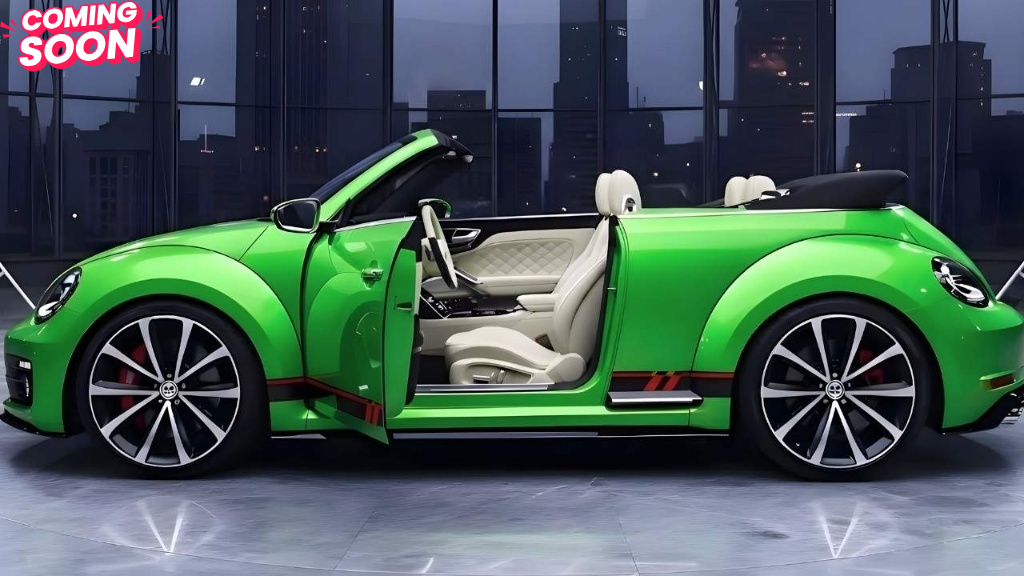
2026 Volkswagen Beetle Returns : is more than just a car; it is a cultural icon that has transcended generations, continents, and automotive trends. From its humble beginnings in pre-war Germany to becoming one of the most recognizable vehicles in the world, the Volkswagen Beetle has carved a unique place in history. Its rounded shape, distinctive design, and approachable personality made it a symbol of freedom, individuality, and affordability. Over the decades, the Volkswagen Beetle has been embraced by millions of drivers who found in it not just transportation but a companion that reflected their lifestyle and values. The story of the Volkswagen Beetle is one of resilience, reinvention, and enduring charm, making it a subject of fascination for car enthusiasts and casual admirers alike.
Origins and Evolution
The Volkswagen Beetle was conceived in the 1930s as part of a vision to create a “people’s car” that was affordable, reliable, and practical for everyday use. Designed by Ferdinand Porsche under the directive of Adolf Hitler, the car was intended to mobilize the German population. Production was interrupted by World War II, but after the war, the Volkswagen Beetle became a cornerstone of Germany’s economic recovery. By the 1950s, the Volkswagen Beetle was being exported worldwide, quickly gaining popularity in markets such as the United States, where its quirky design and low price appealed to young buyers.
The Volkswagen Beetle evolved over the years, with improvements in engine performance, safety features, and comfort, but it retained its iconic silhouette. The car became synonymous with counterculture movements in the 1960s and 1970s, embraced by those who sought alternatives to the large, gas-guzzling vehicles dominating American roads. The Volkswagen Beetle was not just a car; it was a statement of simplicity and individuality. Even as automotive technology advanced, the Beetle’s charm remained intact, and it continued to sell in millions, eventually becoming one of the best-selling cars of all time.
Cultural Impact
Few cars have achieved the cultural resonance of the Volkswagen Beetle. Its presence in movies, music, and art cemented its place in popular culture. The Volkswagen Beetle was immortalized in the Disney film “Herbie,” where the car was portrayed as a lovable character with a personality of its own. This portrayal reinforced the idea that the Beetle was more than metal and mechanics; it was a friend, a partner, and a symbol of joy.
The Volkswagen Beetle also became associated with the hippie movement, often painted in bright colors, adorned with flowers, and used as a vehicle for road trips and adventures. Its affordability made it accessible to students, artists, and free spirits, further embedding it in the narrative of freedom and self-expression. The Volkswagen Beetle’s design was so distinctive that it became instantly recognizable, even to those who were not car enthusiasts. Its rounded shape and friendly demeanor made it approachable, contrasting sharply with the aggressive lines of other vehicles. The Beetle’s cultural impact extended beyond the West, finding admirers in Latin America, Asia, and Africa, where it became a symbol of practicality and reliability. The Volkswagen Beetle was not just a car; it was a global phenomenon that connected people across cultures and generations.
Modern Reinventions
As the automotive industry advanced, Volkswagen faced the challenge of keeping the Beetle relevant while preserving its heritage. In the late 1990s, Volkswagen introduced the New Beetle, a modern reinterpretation of the classic design. The New Beetle retained the rounded shape and playful personality but incorporated contemporary features such as advanced safety systems, improved performance, and modern interiors. This reinvention appealed to nostalgic buyers who remembered the original Volkswagen Beetle while attracting a new generation of drivers.
The New Beetle was followed by another redesign in 2011, which gave the car a sportier, more aggressive look while still honoring its roots. These modern versions of the Volkswagen Beetle showcased the brand’s ability to adapt to changing consumer preferences while maintaining the essence of the original. However, despite these efforts, Volkswagen eventually announced the discontinuation of the Beetle in 2019, marking the end of an era. The decision reflected the shift in consumer demand toward SUVs and crossovers, but it did not diminish the legacy of the Volkswagen Beetle. Enthusiasts continue to celebrate the car through clubs, events, and restorations, ensuring that the spirit of the Beetle lives on. The modern reinventions demonstrated that while the Beetle may no longer be in production, its influence remains strong in the automotive world.
Conclusion
The Volkswagen Beetle is a testament to the power of design, culture, and emotion in shaping the identity of a car. From its origins as a utilitarian vehicle to its rise as a global icon, the Volkswagen Beetle has left an indelible mark on automotive history. Its cultural impact, spanning movies, music, and social movements, reflects its ability to connect with people on a deeper level. The modern reinventions of the Volkswagen Beetle showed that even as times change, the essence of the car remains timeless. Though production has ceased, the Volkswagen Beetle continues to inspire admiration, nostalgia, and passion among enthusiasts worldwide. It is more than a car; it is a symbol of resilience, individuality, and joy. The Volkswagen Beetle’s story is one of enduring appeal, reminding us that true icons never fade—they evolve, adapt, and remain etched in memory forever.